.png)
.png)
.png)
.png)
.png)
.png)
Vaixells de Segona Mà: Com Triar el Millor per…
Comprar un vaixell de segona mà pot ser una de les decisions més emocionants pels amants de la navegació. Ja sigui que busques un veler per a les teves properes aventures al mar o una llanxa ràpida per a caps de setmana familiars, triar correctament és crucial per gaudir d’una experiència sense complicacions.
En aquest article, explorarem com avaluar l’estat d’una embarcació, quines preguntes heu de fer al venedor i per què Network Yacht Brokers és el vostre millor aliat en aquesta aventura.
Optar per un vaixell de segona mà té múltiples avantatges:
- Estalvi econòmic: Els vaixells usats solen ser més accessibles que els nous, permetent que puguis adquirir una embarcació més gran o millor equipada per un preu competitiu.
- Major Varietat: Trobaràs models descatalogats o personalitzacions que els nous no ofereixen.
- Desvalorització Controlada: A diferència dels vaixells nous, que perden valor ràpidament, un vaixell usat tendeix a mantenir el preu més estable.
- Immediata Disponibilitat: En comprar un vaixell usat, pots començar a navegar molt abans que si n’encarregues un de nou.
Tot i això, comprar un vaixell de segona mà requereix atenció als detalls. A continuació, us oferim una guia completa per ajudar-vos en aquest procés.
1. Avaluar l'estat d'una embarcació
Inspecció Exterior
Comença pel casc, ja que és un dels components més importants:
- Busca esquerdes, abonyegaments o signes de reparació que puguin indicar danys previs.
- Reviseu l’estat de l’ antifouling i si el casc ha rebut manteniment recent.
- Comprova la integritat del timó i la quilla.
Inspecció Interior
L’interior ha de ser funcional i còmode:
- Examina si hi ha humitat, floridura o males olors , ja que poden ser indicadors de problemes estructurals o d’estanquitat.
- Verifica l’estat dels mobles, cabines, cuina i bany .
- Assegureu-vos que el sistema elèctric estigui en bon estat i funcional.
Motor i Sistemes de Propulsió
- Reviseu les hores d’ús del motor. Un motor ben mantingut és més important que un amb poques hores.
- Demana registres de manteniment recents, incloent-hi canvis d’oli i revisions de filtres.
- Observa si hi ha fuites d’oli o combustible.
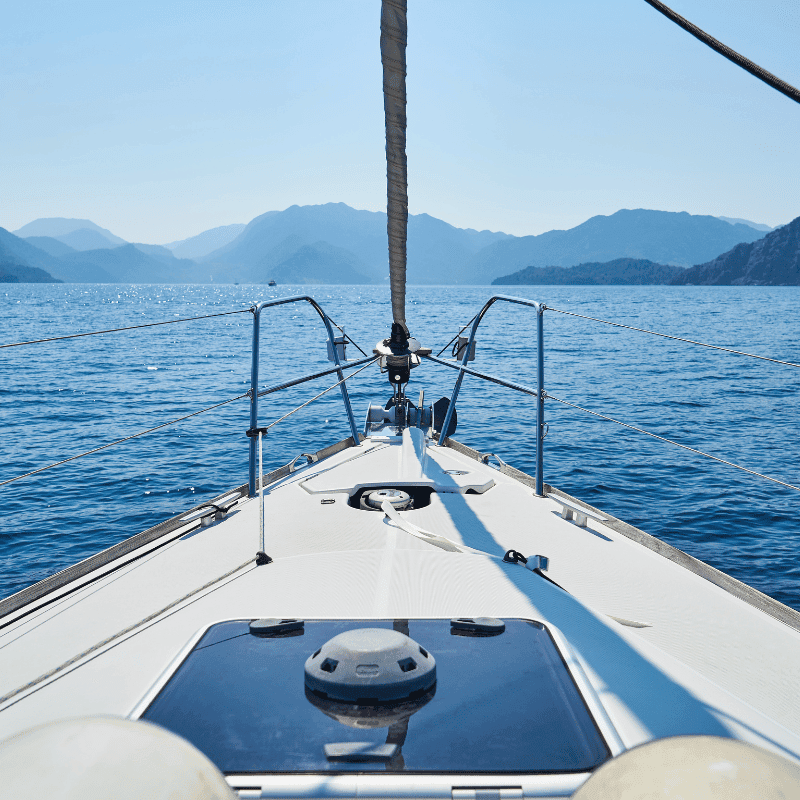
Espelmes i Jarcia (Per Velers)
- Inspecciona les espelmes a la recerca d’esquinços o desgast.
- Verifica l’estat de la jarcia fixa i de labor, així com dels enrotlladors de gènova i major.
2. Preguntes Clau que has de fer al Venedor
Historial de Propietat i Ús
- Quants propietaris ha tingut el vaixell?
- Per què s’ha utilitzat principalment (navegació costanera, creuers, regates)?
- ¿ Ha estat molt de temps fora de l’aigua?
Manteniment i Reparacions
- Quin tipus de manteniment s’ha fet regularment?
- ¿ Heu patit danys o reparacions importants?
- Quan es va fer el darrer antifouling?
Estat de la Documentació
- ¿ Està tota la documentació en regla?
- El vaixell té càrregues o deutes pendents?
- Està registrat en un país que compleixi les normatives locals i internacionals?
Condicions i Garanties
- Hi ha garanties sobre el motor, les espelmes o l’estructura?
- És possible fer una prova de navegació abans de comprar?
Preguntes addicionals, com les relacionades amb equipament i accessoris (sistemes de navegació, seguretat, confort), també són fonamentals segons les vostres necessitats.
A Network Yacht Brokers sabem que la compra d’un vaixell de segona mà no és una decisió senzilla. Per això, oferim una experiència integral i professional que garanteix seguretat, transparència i un servei personalitzat.
Per què Triar-nos
Àmplia Xarxa d’Embarcacions: Tenim accés a una extensa xarxa de vaixells de segona mà, des de velers fins a llanxes de motor, perquè trobis exactament el que busques.
Inspecció professional: Comptem amb un equip d’experts que inspeccionen cada embarcació, identificant possibles problemes i assegurant-nos que cada vaixell estigui en condicions òptimes.
Assessorament Integral: T’acompanyem en cada etapa del procés, des de la cerca inicial fins al tancament de la transacció, assegurant-nos que tot es faci conforme a la normativa.
Transparència Total: Ens assegurem que tota la documentació estigui en regla, oferint-te la tranquil·litat de fer una compra segura.
Servei Personalitzat: Adaptem el nostre enfocament a les teves necessitats específiques, ja siguis un comprador primerenc o un navegant experimentat a la recerca d’una millora.

4. Consells per a una Compra Reeixida
Defineix les teves Necessitats
Abans d’iniciar la cerca, tingues clar per què utilitzaràs el vaixell:
- Vols un veler per a navegació a vela o una llanxa ràpida per a activitats esportives?
- Quina mida necessites per allotjar còmodament els tripulants?
- Quin és el teu pressupost, incloent-hi despeses de manteniment?
Fes una prova de navegació
No compris un vaixell sense tastar-lo a l’aigua. Això et permetrà verificar:
- Com respon el motor i els sistemes de navegació.
- Si hi ha vibracions anòmales o sorolls sospitosos.
- L´estabilitat i el maneig en diferents condicions.
Compte amb un Pèrit Nàutic
Un pèrit nàutic pot detectar problemes que no són evidents per a l’ull inexpert, com ara corrosió, defectes estructurals o sistemes mal mantinguts.
Negocia el Preu amb Confiança
Després de la inspecció, utilitza les troballes per negociar un preu just. A Network Yacht Brokers, ajudem les dues parts a arribar a un acord satisfactori.


Conclusió
A Network Yacht Brokers Barcelona , som aquí per fer que aquest procés sigui senzill, transparent i exitós. Amb anys d’experiència en el brokeratge nàutic, hem ajudat innombrables navegants a trobar el vaixell dels seus somnis, sempre amb la tranquil·litat de saber que estan fent una inversió segura.
Estàs llest per fer el primer pas cap a la teva propera aventura al mar? Contacta’ns avui mateix i descobreix per què som líders a la compra i venda d’embarcacions de segona mà a Barcelona.
Telèfon: 937 97 82 40
Correu Electrònic: [email protected]
Adreça: Puerto Ginesta Local 810, 08860 Castelldefels, Barcelona, Espanya
El teu proper vaixell t’està esperant. No ho deixis passar!

















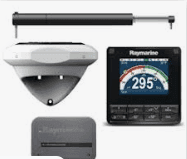 A modern-quality autopilot is worth its weight in gold (as they say). If you are sailing short-handed, then it is almost essential on a reasonable-size fin keel yacht. I can argue an exception if you sail a long-keel yacht. It is possible to set sails, add a little weather helm and keep on trucking(as they say). Locking the helm will require navigational input over time, but it’s great fun!
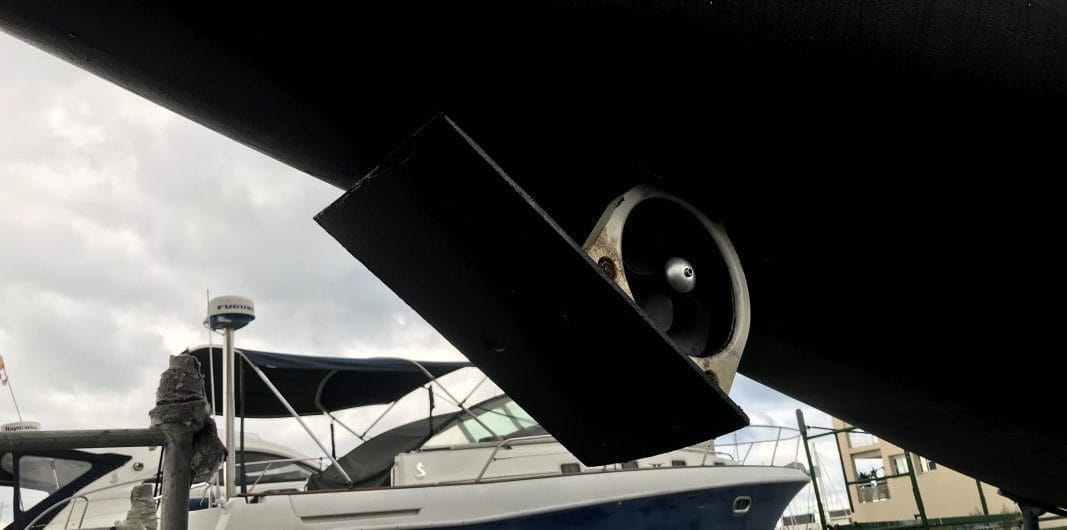
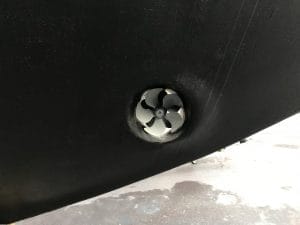
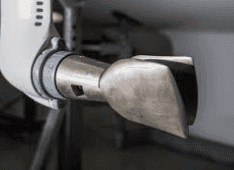 I selected reverse when sailing for years to save wear and tear on my yacht gearbox. They said that the components inside the gearbox are fixed and wearing (sounds reasonable) because the prop stops spinning. They also say that a fixed propellor creates less drag than a free-spinning prop (no idea about that). Then I met some people who sailed the Atlantic having to replace a gearbox on a reasonably modern yacht. Selecting reverse to lock the propellor over long periods puts a strain on the gearbox clutch that can cause It to wear out (wow, I never knew that). The solution, if you are concerned, is a folding propellor. It’s a lovely thing to have, and a buyer for your yacht will be happy you invested money in one.
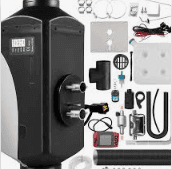
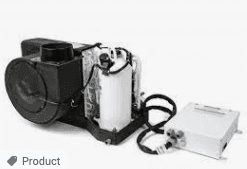 Perhaps the Dyson fan will work well in smaller boats, but Air conditioning with a reverse cycle heat setting will transform the pleasure of sailing when you can hook up to shore supply. Lots of Mediterranean Marinas do not charge for electricity. They see it as part of a package deal. So from the moment you arrive until you depart, you can keep the yacht chilled to a perfect temperature if you are in a marina. Just like heating, Air conditioning will transform your boating experience.
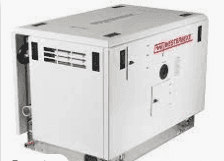 Before you buy a yacht, you must know that ff you plan to spend a lot of time at anchor and are spicing up a new 15-metre-plus yacht, then a factory fit generator might be on your list of extras. It only made my list because I wanted to comment on the difference between fitting a low-cost aftersales unit and a proper factory-integrated unit. A Lot of research is needed if you are going down the generator installation route. In my experience, few companies can save money on a factory-installed unit.
 Let me explain the thinking behind the statement above. For example, let’s take the Hamble in the UK. This is a place where buyers can find every type of boat. However, if I was interested in buying a racing yacht, the Hamble in England might be a good starting point to investigate racing yachts. The Hamble is the centre of the UK Marine industry and where many companies support sailing as a sport. On the other hand, if I was looking to purchase a superyacht, I might contact Yach Brokers along the southern French coast in or around Monaco.
 We hadn’t been open for business long in Spain when an enquiry came in from North America. I was fascinated by a young Canadian couple’s mindset. They inquired about a 15-metre sailing yacht we had just put for sale on brokerage in Barcelona. They planned to fly to Barcelona (they said it looked like an easy place to get to with lots of boats). They would buy a one-way ticket and sail the yacht back to Canada after first learning to sail in the Mediterranean, where sailing was easy. Wow, the logic was astonishing. Look at the Globe and the Mediterainina was nothing more than a big lake. Plenty of places to visit. Perhaps they would spend a summer in Europe before crossing the ocean. Put that way, It sounds fantastic!
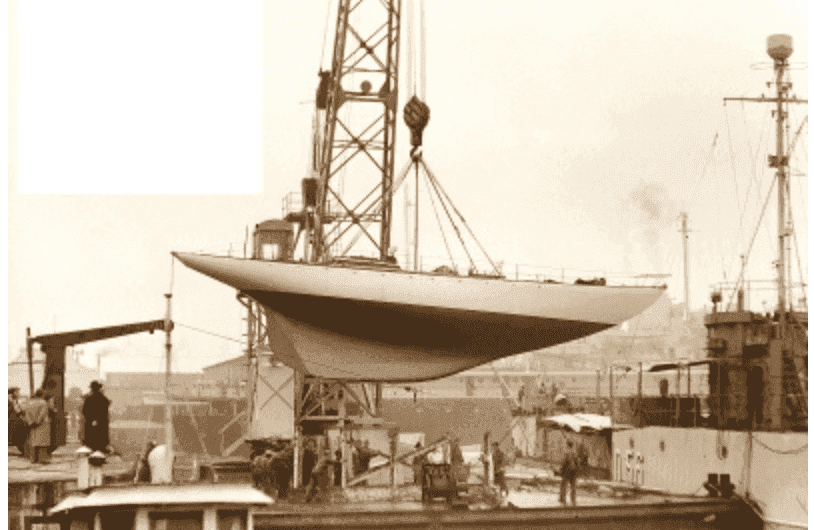
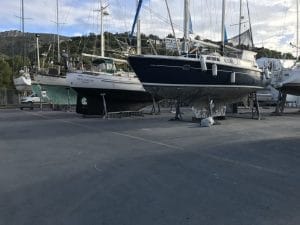
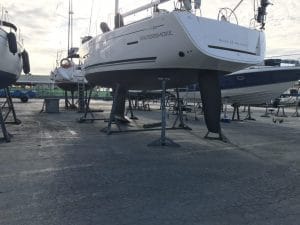
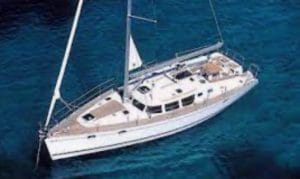 Many years ago, we took a beautiful Jeanneau 43 DS Yacht in exchange for a new Jeanneau 47 Ds. The 43 was in Palma Majorca, Spain. Part of the deal being we collected the PX and shipped it back to the base in North Wales. The deal was done, so we flew to Mallorca to collect the yacht. We sailed her back to Northern Spain, where she was collected by truck and delivered to the UK.
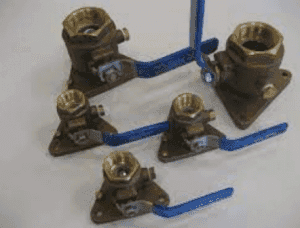 the fault more quickly was leaving the marina. It was impossible not to motor against a strong incoming tide until fifteen minutes after leaving the berth. One might motor for half an hour on a bad day until sufficient water was under the keel, allowing the engine to be extinguished. My point is the engine was always running, so it was difficult to isolate the problem. The strange thing was that when the yacht sat for extended periods, the bilge stayed bone dry.
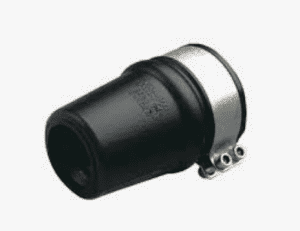 little, but I had to find the cause. Another conversation with the old owner confirmed my suspicions that this problem had been around since the yacht was built. I had paperwork evidence that the flexy exhaust system had been changed under warranty. This had not resolved the issue.
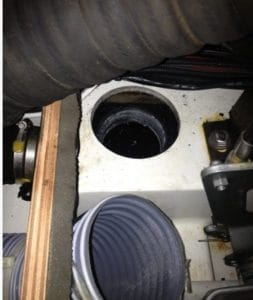 silencer is not visible without removing even more floor sections, and what a job that was! Not convinced it was leaking, eventually, we decided to remove it to examine the underside of the engine. It’s not an easy job to get it out, but finally, out she came. Absolutely nothing to see!
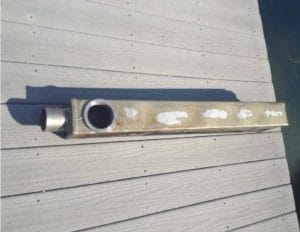 Now we get to the point of telling you this story. As it happens, the mystery was not confined to our yacht. I helped another dealer who was having a nightmare with a client. The same sort of problem, a tiny leak, but not when the yacht sat idle, so it was tough to diagnose the problem.